
The prequalification process is your agency's gateway to publicly funded home care contracts. Here's exactly what it takes to get on Ontario Health atHome's list—and why a connected system is your competitive edge.
If you run a PSW agency in Ontario, you have probably wondered about government contracts.
Maybe you have seen the Ontario Health atHome procurement notices. Maybe you have heard that agencies are prequalifying to bid on home care services. Maybe you are not sure what it takes to get on the list.
I have run a live PSW agency in St. Thomas, Ontario for three years. I have watched the prequalification process evolve. And I have seen what it takes to be a viable vendor for publicly funded home care.
Here is what you need to know.
The Problem: Prequalification Is the Gatekeeper for Government Contracts
Ontario Health atHome, with support from Ontario Health, administers the service provider prequalification process as a key step in the procurement of safe, high-quality home care services across the province .
Prequalification identifies potential vendors eligible to provide publicly funded home care services. Once prequalified, service providers can bid on home care service procurements in Ontario .
The Ministry of Health mandates prequalification of Service Provider Organizations (SPOs) to ensure safe, high-quality home care services . The process aligns with the Ontario Public Service Procurement Directive to ensure openness, fairness, and transparency .
The challenge is that many agencies do not know what the process requires. They do not know where to start. And they do not know how to position their agency for success.
In addition to the main prequalification process, there is also a separate Provider Registry for the Family-Managed Home Care (FMHC) program. This is a pre-vetted list of professional home care agencies approved by Ontario Health atHome for families using FMHC funding . Being on this registry is critical for agencies that want to serve families who manage their own care budgets.
The bottom line: prequalification is not optional if you want government contracts. You need to know the requirements, prepare your application, and have the systems in place to prove you can deliver.
Why This Matters Right Now in 2026
The prequalification landscape is changing fast.
First, the process is now active on the Ontario Tenders Portal (OTP) . The current prequalification cycle for 2025-26 requires applicants to register on OTP, locate the opportunity, and submit applications through the Ontario Health SharePoint submission portal .
Second, prequalification levels are confidential to Ontario Health atHome, Ontario Health, and the individual service providers . This means you cannot see how other agencies are rated—but you can ensure your own application is as strong as possible.
Third, the prequalification status expires December 31, 2027 . This is not a one-time process. You need to maintain your status and reapply when required.
Fourth, the supply chain crisis in 2024-25 highlighted the importance of reliable vendors. Ontario Health atHome faced significant challenges with medical supply delivery disruptions that impacted patients across the province . The crisis led to the termination of the agency's CEO and a commitment to "strengthen their delivery of connected home care services" . This means Ontario Health atHome is now more focused than ever on vendor reliability and operational stability . Agencies that can prove they have robust systems will have a competitive advantage.
The bottom line: if you are not already on the prequalified list or actively working toward it, you are missing opportunities.
The Solution: A Connected System That Proves You're a Viable Vendor
The prequalification process requires applicants to provide information related to their organization's ability to safely provide high-quality care . This is where a connected system becomes your competitive advantage.
A connected system—like the one we implement at Essential Staff using Odoo 19 Enterprise—demonstrates that your agency has the operational maturity to handle government contracts.
Here is how the connected system makes your agency more attractive to Ontario Health atHome:
Requirement | Manual Agency | Connected System (SYNERZ) |
Financial Stability | Spreadsheets, unreliable tracking | Full accounting, real-time reporting |
Operational Stability | Disconnected tools, manual processes | One connected system—recruitment to payroll |
Compliance Tracking | Manual credential checks, paper files | Automated alerts, colour-coded dashboard |
Quality Assurance | Ad hoc, difficult to prove | Auditable records, clear workflows |
Service Delivery | Inefficient, error-prone | Streamlined, scalable |
What the Connected System Proves
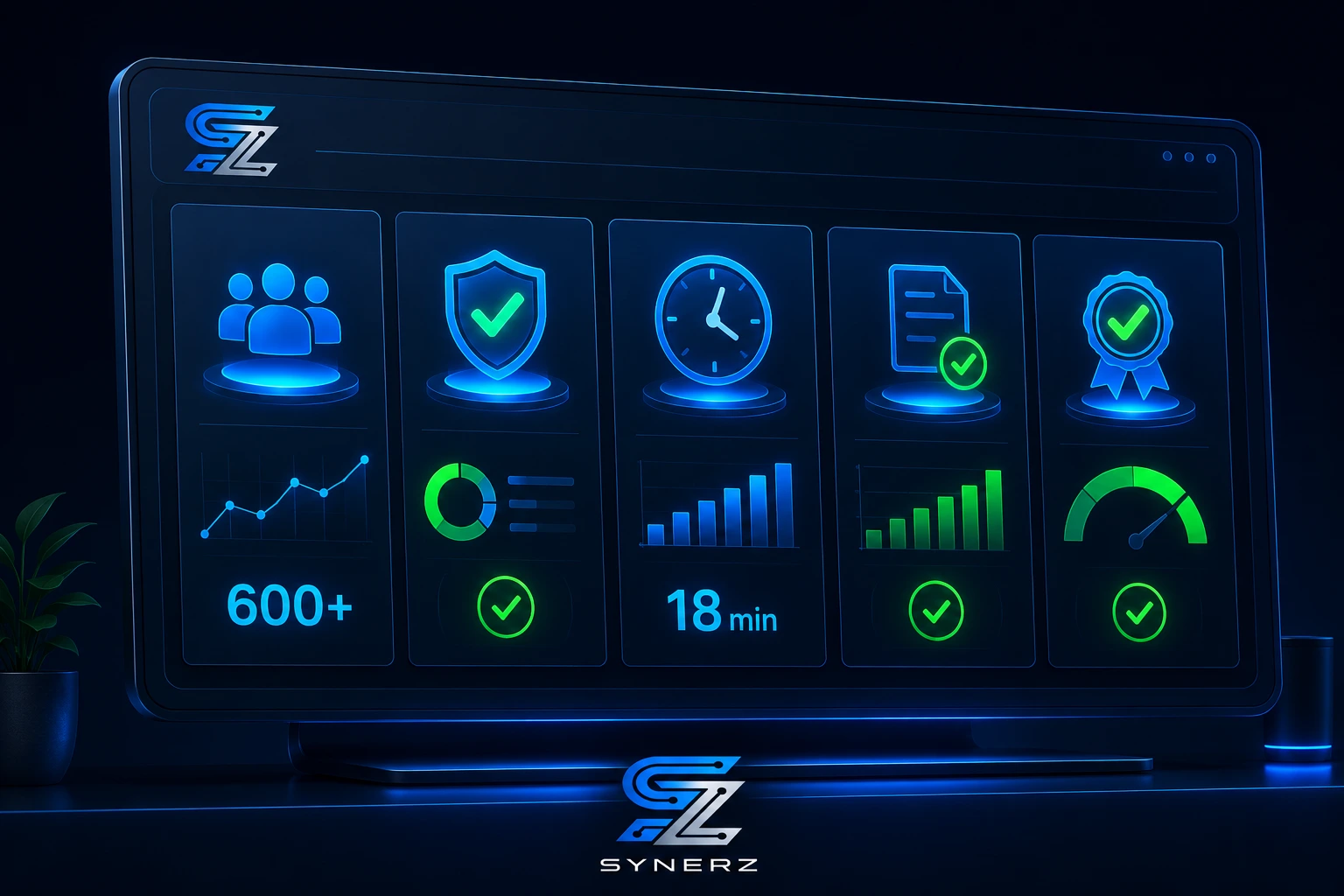
First, it proves you can handle volume. At Essential Staff, we have 600+ applicants in our database—up from 187 baseline. We can scale to meet the demands of a government contract.
Second, it proves you are compliant. We have automated credential alerts at 30, 14, and 7 days before expiry. Our colour-coded compliance dashboard shows green (valid), yellow (warning), and red (expired) at a glance.
Third, it proves you are operationally efficient. We process 26 biweekly payroll runs per year. What used to take 3+ hours now takes 18 minutes. We can notify 600+ PSWs of an open shift in under 3 minutes.
Fourth, it proves you can meet reporting requirements. The system generates reports on demand—for recruitment, scheduling, payroll, billing, and compliance.
This is not a theory. This is how we operate every day at Essential Staff. And it is exactly the kind of operational maturity Ontario Health atHome is looking for.
💡 Insider Tip
Start tracking your operational metrics now. Ontario Health atHome will want to see evidence of your agency's stability and capacity. A connected system gives you real-time data on your applicant pool, workforce, and compliance status.
How the Prequalification Pipeline Works
Here is the step-by-step process for getting prequalified with Ontario Health atHome.
Step 1: Register on the Ontario Tenders Portal (OTP)
The process starts with registration on the Ontario Tenders Portal (OTP), the Government of Ontario's bidding portal for procurement opportunities . Your organization must first be registered on the OTP to access the prequalification materials . The OTP is maintained independently, so you will need to contact OTP support for technical issues .
Step 2: Access Prequalification Materials
Locate the prequalification opportunity on the OTP. Search for: "Prequalification for Home Care Service Provider Organizations" with Project Reference "2025 SPO Prequal" . Download the forms and guidelines from the OTP.
Step 3: Complete the Application
Review the materials carefully. Gather your organizational documents. Complete the forms and surveys . The application requires information related to your ability to safely provide high-quality care, financial stability, and operational capacity .
Step 4: Request SharePoint Access
Request access to the Ontario Health SharePoint submission portal . This is where you will submit your completed application.
Step 5: Submit Your Application
Complete the digital versions of the surveys on Ontario Health's SharePoint submission portal. Upload your application materials . Submit by the deadline (June 6, 2025, for the current cycle).
Step 6: Wait for Evaluation
Applicants will receive an update on evaluation status in September . Successful applicants will be prequalified and eligible to respond to procurement requests . Prequalification does not guarantee a contract—it makes you eligible to bid .
Step 7: Maintain Your Status
Prequalification status expires December 31, 2027 . You will need to reapply or maintain your status as required.
Real Results From a Live Ontario Agency
Essential Staff is a live PSW agency in St. Thomas, Ontario. The connected system I am describing is how we operate every day—and it is exactly the kind of system that makes agencies competitive for government contracts.
We started with 187 applicants in our database. Today, we have 600+. We process 26 biweekly payroll runs per year. What used to take 3+ hours now takes 18 minutes. We have zero CRA penalties. We can fill an open shift in under 3 minutes by alerting 600+ PSWs.
No competitor can replicate this proof because it comes from our own live agency operations. We are not selling a theory. We are selling a system we already use every day.

Step-by-Step: How to Get Started with Prequalification
You do not need to have a connected system today to start the prequalification process. Here are actionable steps you can take right now.
Review the Prequalification Requirements. Read the OTP documents carefully. Understand what Ontario Health atHome is looking for . Identify gaps in your current operations.
Register on the Ontario Tenders Portal. If you have not already, register your organization on the OTP . This is the first step to accessing the prequalification materials.
Audit Your Operational Systems. Do you have a reliable way to track credentials? Can you generate reports on demand? Do you have clear workflows for recruitment, scheduling, and payroll? If not, start building these systems now.
Contact Ontario Health atHome. If you have questions, submit them through the Applicants' Questions for Clarification document to prequalification@ontariohealth.ca .
Start Building Your Connected System. Even if you are not ready for a full ERP, start connecting your tools. Use a shared platform for recruitment, scheduling, and payroll. Eliminate data silos.
Common Mistakes to Avoid
Mistake 1: Not Registering on the OTP
You cannot access the prequalification materials without registering on the Ontario Tenders Portal . This is the first step. Do not skip it.
Mistake 2: Missing the Application Deadline
The prequalification application has a strict deadline. For the 2025-26 cycle, the application deadline was June 6, 2025 . Missing the deadline means waiting for the next cycle.
Mistake 3: Ignoring Operational Systems
Prequalification requires proof that you can safely deliver high-quality care . If you are still using manual spreadsheets and paper files, you will struggle to prove your operational maturity.
Mistake 4: Overlooking the Provider Registry
The FMHC Provider Registry is a separate pre-vetted list for agencies working with families who manage their own care budgets . Do not overlook this opportunity—it is another pathway to government-funded clients.
Mistake 5: Not Tracking Your Metrics
Ontario Health atHome will want to see evidence of your agency's stability. Track your applicant pool, workforce, compliance status, and financials. A connected system makes this easy.
Ready for a Clear Picture of Your Prequalification Readiness?
Book a free 20-minute prequalification review. We review your current operations and give you a clear picture of where your agency stands. No pitch. No obligation. Just clarity.
📧 info@synerz.ca | 📞 +1 647 493 8110 | 🌐 www.synerz.ca
Frequently Asked Questions
What is prequalification for home care service providers in Ontario?
Prequalification is a process administered by Ontario Health atHome that identifies potential vendors eligible to provide publicly funded home care services . Once prequalified, service providers can bid on home care service procurements in Ontario .
How do I apply for prequalification with Ontario Health atHome?
The process starts with registering on the Ontario Tenders Portal (OTP), locating the "Prequalification for Home Care Service Provider Organizations" opportunity, completing the application, and submitting it through the Ontario Health SharePoint submission portal .
What is the Ontario Health atHome Provider Registry?
The Provider Registry is a pre-vetted list of professional home care agencies approved by Ontario Health atHome for families using Family-Managed Home Care (FMHC) funding . Agencies on the registry can be paid using FMHC budgets.
How long does prequalification last?
Prequalification status expires December 31, 2027 . Agencies need to maintain their status and reapply when required.
What does Ontario Health atHome look for in a service provider?
The prequalification process assesses an organization's ability to safely provide high-quality care, financial stability, and operational capacity . Applicants must provide information related to these areas .
Why do I need a connected system for prequalification?
A connected system proves your operational maturity—you can track credentials, generate reports, and demonstrate compliance. Ontario Health atHome wants vendors who can reliably deliver care. A connected system is evidence that you can.
Author: Munawar Abbas — Founder & CEO, SYNERZ